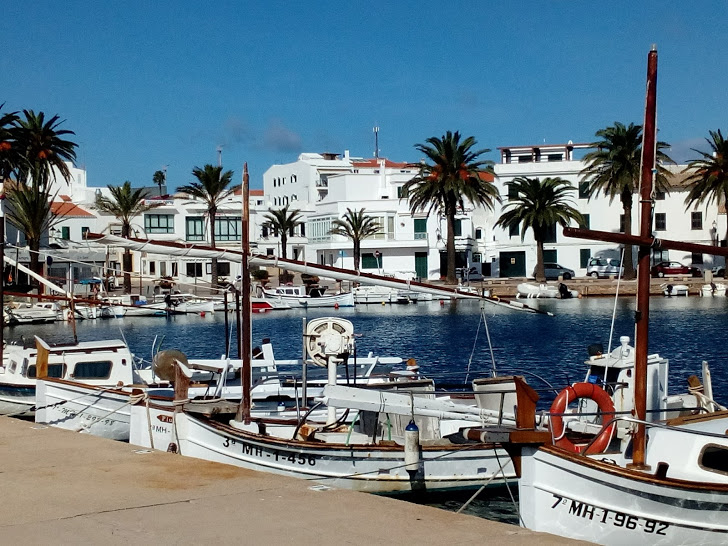
Menorca was the final island of this trip and my favourite Balearic island. In spite of the thousands of visitors it receives each year, Menorca still manages to feel small, sleepy and friendly – maybe that’s because I went at the very end of the summer and avoided all the main tourist resort areas. This was my second ever visit to the island. The first was near 40 years ago when I came on (my first ever) package holiday with my Dad and brother – we had a great time and I still have very fond memories of my first ever visit to Spanish territories.


The Romans called the island Minorica (little one) to distinguish it from the larger Maiorica (large one!). It is the most northerly and easterly of the Balearics as well as Spain’s most easterly point and therefore where dawn first breaks over Spanish lands. Menorca covers an area of 701 kms² and is situated in the middle of the western Mediterranean approximately equidistant between the coasts of the south of France and the north of Algeria in the north and south and the coasts of Sardinia and mainland Spain to the east and west. It is a beautiful island with a rugged coastline and a huge number of beaches ranging from tiny, rocky coves to long stretches of sand. At last count in 2010, Menorca was home to some 94,383 people – 28,641 of whom live in Ciutadella, the former capital and largest city on the island and also my favourite place.
I took the boat from Port d’Alcúdia in north east Mallorca to Ciutadella in the west of Menorca. The crossing takes approximately 3 hours and was horrendously rough! The weather changed overnight from a beautiful sunny beach day to a grey, stormy and very unpleasant day. The ship was huge but not very busy so I luckily got a nice long comfortable sofa seat with a table and an uninterrupted view of the horizon – crucial for seasick survival. I stocked up with food and coffee and prepared to sit and stare at the horizon for 3 and half hours. The sea was amazingly rough and I didn’t see a single passenger who wasn’t sick! I survived – just – it was a memorable journey for all the wrong reasons! It’s only a short walk along the coastal road from the port to the centre of Ciutadella town and, in desperate need of fresh air and solid ground beneath my feet, I enjoyed the walk to my lovely little hotel with the sea right outside my window.


This beautiful island has had an interesting history and is famous for its megalithic stone monuments, evidence of early prehistoric habitation. It was under Moorish rule from 903 to 1287 and was, surprisingly, even under British rule for most of the 18th century. In common with the other Balearic islands, the two official languages are Catalan and Castilian Spanish – locals speak a Catalan dialect known as Menorquí.
Built on the hill above a deep and narrow natural harbour, Ciutadella is a charming city with an historic centre full of ancient and beautiful buildings with winding labyrinthine streets and houses painted in colours from a watercolour palette. The houses are all very well cared for and recently painted. The streets are nicely swept and the whole town gives an impression of being clean and loved by its inhabitants. It’s a joy to wander around.


Ciutadella de Menorca, to give it its full name, was capital of Menorca until the British moved the capital to Mahon on the other side of the island in 1722. It remained the island’s religious centre as the Bishop apparently refused to move to Mahon! Menorca’s Cathedral is located in the old quarter of Ciutadella and was built in 1287 on the foundation of an older mosque. The town has retained a grandeur that I didn’t feel in Mahon.


The town hall is the former palace of the Arab Governor and many of the city’s buildings were built in the 17th century in grand Italian style. The result is a delightful, compact and totally charming town built in golden stone, full of architectural treasures and surprises and decorated with elegant fountains, wide green squares and open spaces with stunning views down onto Ciutadella’s narrow and pictoresque harbour. The thing I liked most was that normal life goes on in amongst all the history. Little supermarkets and tiny food shops sit side by side with glorious churches and old palaces. Old men played petanque in the square. The cloistered market building is impressive and full of life during the day and, like everywhere in Spain, tables and chairs of bars and restaurants are squeezed into every available space.


On the opposite side of the harbour from the old town, luxury houses nestle amongst the greenery and yachts are moored in various little inlets. Terraced gardens line both sides of the inner part of the harbour and flights of stairs lead up to the gardens and to the streets above. At night the town and the harbour are lit up spectacularly and the reflections of the buildings and boats on the narrow waters is a stunning site. At the end of October when I visited, the restaurants were nearly all shut up for winter and the harbour was practically deserted at night. There was an eery and beautiful silence about the whole area, the moon was surprisingly bright and it was lovely to stroll along the quayside and take photos.


I stayed on the outskirts of Ciutadella for my 3 night stay here right on the water’s edge. The town is well-served with a wide, coastal path which runs along the top of the rocky cliffs, continues around the harbour and continues along the other side along the wooded hills and grey rocky cliffs to the fantastic lighthouse, tiny white church and beautiful old holiday villas built along the coast north of the town – a fabulous place to watch the sunset.


The weather wasn’t nice enough for the beach during my stay (although some tourists were braving it!) so I went for some lovely long coastal walks, following some of Menorca’s well signposted pathways. After exploring the town centre and coastline around the harbour, I headed south along the cliffs to Cala Blanca passing lots of little beaches and coves on the way. I stopped for a beer in a cliff top bar at Sa Caleta and a paddle on Cala Santandria beach where a group of ducks were attracting a lot of attention swimming across the bay.


On my last day, I left Ciutadella and – following the hotel Manager’s advice – headed for Fornells – a lovely fishing village on the island’s north coast. I had to change buses in the inland town of Es Mercadal so took the opportunity to have breakfast and to explore this charming little town with its pavement cafés and beautiful church.


Fornells is a picture postcard village – white houses, fishing boats, palm trees blowing in the breeze and some fabulous walks along the coast where the deep blue sea crashes white against the rock. I took some photos of the fishing boats and wandered the deserted backstreets of this little white town before taking the path out of town and up to the shrine in a cave and the huge tower on the top of the hill with breathtaking views across the water.


I found a sunny table in the main square and just had time before the bus left for a delicious fish lunch and some cold beer before treating myself to a rapidly-bought, lovely white cotton shirt from one of the harbourside shops. I took the bus to Mahon for the last part of my visit.


I finished my trip to Menorca with a quick walk around the present-day capital, Mahon, (Maó in Catalan) – said to be where a French chef invented mayonnaise (salsa mahonesa). This is subject to some discussion as aiolli (garlic mayonnaise) has been made in Catalan regions for centuries. Mahon, or Port Mahon as it was known in the days of British rule, was an important port for the British during their time ruling the island. It’s an interesting town (although I liked Ciutadella better) and there are some great shops selling Menorcan delicacies and the famous ‘avarcas’ – Menorcan sandals famous the world over.


The port is huge and wide – it’s easy to understand why the British preferred Mahon to Ciutadella. On the day I was there a huge tall ship was in port and was preparing to leave. A small crowd gathered to watch the crew preparing to depart. The quayside was lined with yachts and boats of all shapes and sizes and I heard a lot of British voices amongst the boat owners. I was quite tired of lugging my backpack around by this point so I climbed the huge, wide flight of steps up from the portside to the town centre and admired some of the stunning buildings on my way back to the bus station and my little shuttle bus to the airport. It was about 7 pm as I walked up through town, the sun was setting and the good people of Mahon were settling down for an aperitif whilst children ran and played in the huge town square. I was quite sad to leave.


I loved Menorca. Traditional and full of character, colourful and friendly. The towns are fascinating, the fishing villages and inland towns pictoresque. The coast is stunning and the water is an incredible blue colour. Go at the beginning or end of season and enjoy this beautiful island at its best.
NEXT ISLAND: Leaving the Balearics behind, I will be heading off to the Egadi Islands off the west coast of Sicily.


I will re-visit some of the earlier islands, but this is a strong contender for most interesting island.Which is suprising given it’s tourism repution.I look forward to more.
LikeLike
The island looks so quaint, love it!
https://2weekendwanderers.com
LikeLike
I have seen Palermo…Fantastical ! Giant vegetables, great idea to re-visit. Very rewarding and educational..
LikeLike